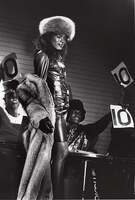
Judges score the 'femme queen realness' category. Participants walking this category are judged on how convincingly they blend in with females. Tina Montana shows the judges how it's done at the Avis Pendavis ball in 1990
A resolution relative to the bust of Nathan Bedford Forrest in the Tennessee State Capitol, stating that Anne Davis is much more deserving of a bust in the state capitol.
This flyer, prepared by the Ann Arbor chapter of Students for a Democratic Society, encourages Midland residents to attend antiwar events at Central Park Band Shell, at Dow Chemical's offices, and along Main Street on Sunday, August 7, and Monday, August 8, 1966.
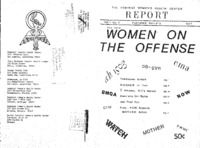
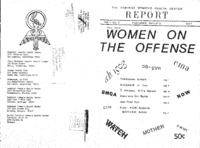
Annual report from the Feminist Women's Health Center detailing abortion activist across the county. This report has details regarding the groups recent annual meeting in Detroit, Michigan.
Annual report from the Feminist Women's Health Center detailing abortion activist across the county. This report has details regarding the groups recent annual meeting in Detroit, Michigan.
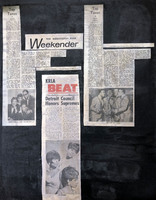
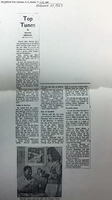
Smokey Robinson is also a VP and songwriter at Motown Records. Attributes success to Berry Gordy: "He's such a dynamic individual...He's like a martyr, someone you can look up to...He's the nucleus of the entire company." On MRC: "The company is owned and operated by young people...There is more than just a business relationship. It's a family relationship."
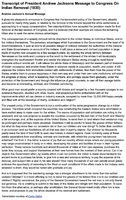
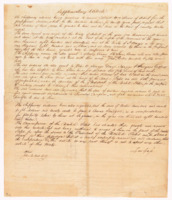
Transcript of an official address given by Pres. Andrew Jackson to the United States Congress in 1830, detailing the beginning of his plan for Indian Removal and laying the foundation for the future boarding schools.
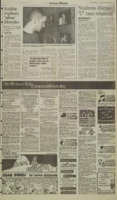
A digital scan of a page of the Michigan Daily from December 5th, 1997, featuring an article about the photo exhibit "Crossing Over: Images of Transgender Performance Across Cultures" and a photo of a student viewing the exhibit. This exhibit showcased photos of Indian kinnar, drag queens in Greenwich Village, and other individuals taking part in "cross-dressing" traditions. These photos were the result of fieldwork by anthropology professor Sarah Caldwell and graduate student Brian Mooney.
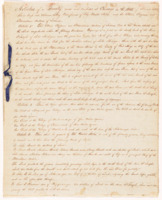
A treaty between the United States and the Chippewa, Ottawa, and Potawatomi nations. Signed August 29, 1821, in chicago, Illinois by territorial governor of Michigan Lewis Cass, US house representative Solomon Sibley and representatives of each tribe. The tribes ceded all lands in Michigan south of the grand river and land in Indiana and Illinois on the southern coast of lake Michigan. Almost four million acres of land was ceded to the US. Signed by Lewis Class, territorial governor of Michigan. The treaty established small reservation boundaries in return for annuities and resources.
In 1807, the Chippewa Nation, Citizen Potawatomi Nation, Gaaching Ziibi Daawaa Anishinaabe, and Wyandot of Anderdon Nation ceded millions of acres of land to Ohio and Michigan. In exchange, the four designated tribes only received $10,000 collectively. After the treaty was signed, their lands in the area were reduced to reservation lands between 1 and 6 square miles.
Treaty Between the United States, represented by President Thomas Jefferson and Secretary of State James Madison, and the Ottawa, Chippewa, Wyandot and Potawatomi Tribes Signed at Detroit on February 25, 1808
A treaty between the United States and the Chippewa nation. Signed October 4, 1842, in La Point, Wisconsin by Robert Straut commissioner on the part of the United States and representatives of the Ojibwe Bands of Lake Superior and the Mississippi River. The Ojibwe ceded an extensive amount of land which included the western part of Michigan’s upper peninsula and parts of northern Wisconsin. The treaty promised the bands money, services, and school, Additionally the treaty allowed hunting and fishing rights on the ceded land.
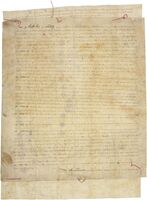
Also known as the Treaty with the Chippewa, it was an agreement between the United States and the Chippewa, Ottawa, and Potawatomi tribes. Signed September 24 1819, in Sagninwa Michigan. The tribes ceded six million acres of land which encompassed much of the central and eastern lower peninsula of Michigan. Signed by Lewis Cass, territorial governor of Michigan. The treaty promised that the US government would pay $1000 every year forever to the tribes and hunting and fishing rights on the land. The US government also promised blacksmiths and tools for farming. Additionally Several smaller tracts of land for tribal use within the ceded territory was also stated in the treaty.
A treaty between the United States and the Ottawa and Chippewa nations. Signed March 28, 1836, in Washington D.C. by the Indian Commissioner for the United States Henry Schoolcraft and representatives from the tribes. The tribes ceded almost fourteen million acres of land which encompassed the northwestern lower peninsula and eastern part of the upper peninsulas in Michigan. The treaty established permanent reservations and gave the tribes money, services, and the right to fish and hunt. This is the largest amount of land that tribes have ever ceded in a treaty.