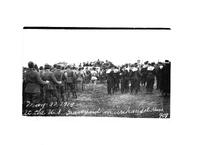
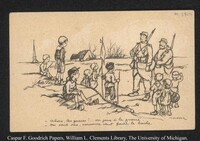
Postcard, at the U.S. Graveyard in Archangel, Russia, May 30, 1919 from the Joel Roscoe Moore papers, 1917-1929, 1940, and 1949-1952 [Folder 4, Item 7]
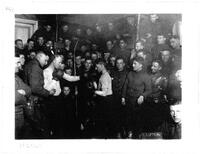
Men of Company A, 339th Infantry, watching a boxing bout in their quarters. Boxing has been one of the chief forms of amusement during the long winter evenings. The two battlers are Sgt. Omar Yarger, (and the left) and Sgt. Robert Montgomery, Co. A, 339th Inf. Village of Visorka Gora, Ust Padenga, Vaga River Column, Russia.
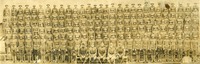
Officers of Co. "M", 339th Inf. 85th Div. Immediately after the return of the company from Bolshie Ozerka front where they repulsed repeated Bolshevic attacks. From L. to R: Lt. Clarence J. Primm, 2nd Lt. Milton J. Carpenter, 2nd Lt. Weiszorek, Lt. Wesley K. Wright, Lt. James R. Donovan, Lt. George M. Stoner, and Capt. Joel Moore
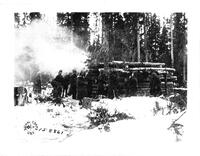
Blockhouse No. 1, the most advanced allied position along the road in the direction of Bolshie Ozerka. The blockhouse and clearing surrounding it were made by men of the 3rd Platoon Co. Co. C, 310 Eng. 339 Inf. 85th Div. Bolshie Ozerka Front. Russia.
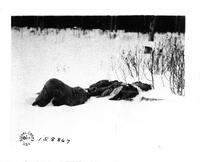
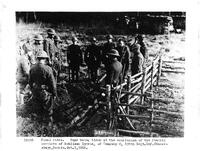
Bolshevik soldier, one of a number killed in an attempted flank attack on the positions held by allied troops on the Obozerskaya road at Verst 16, 339th Inf. 85th Div.
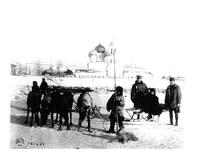
American officers frequently employ reindeer teams in crossing the Dwina River and in going from point to point about Archangel. Here are shown two officers of the Q.M. Corps, Major E. F. Ely and 2nd Lt. R.R. Chatterton, (at the left) with a team which they have just engaged to take them to Archangel Prestin. A Russian young lady (barishna) is also a passenger. 339th Inf. 85th Div. Archangel, Russia.
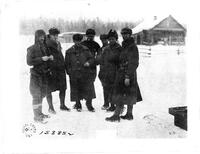
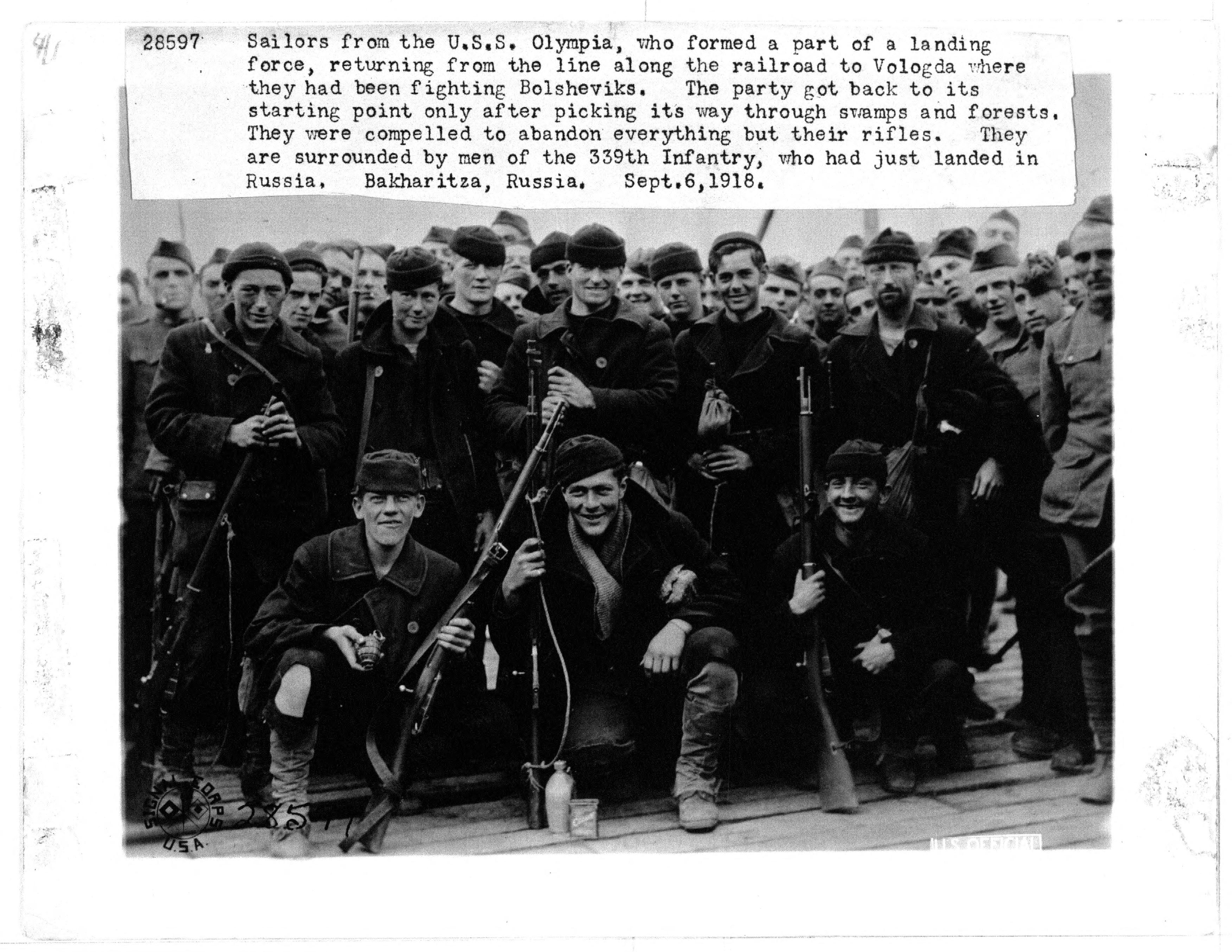
Sailors from the U.S.S., Olympia, who formed a part of a landing force, returning from the line along the railroad to Vologda where they had been fighting Bolsheviks. The party got back to its starting point only after picking its way through swamps and forests. They were compelled to abandon everything but their rifles. They are surrounded by men of the 339th Infantry, who had just landed in Russia.
Convoy of the three ships which carried first American troops to Russia. Left to right: H.M.T. Somoli, flagship; H.M.T. Tydeus; and H.M.T. Nagoya. Bakharitza, Russia.
Graves of first three American soldiers killed in action on the North Russian front. September 16, 1918. Left to right: Ignacy H. Kwasniewski, Mechanic, Co. I; Anthony Soczkoski; Pvt, Co. I; and Phillip Sokol, Pvt. Co. I; all of the 339th Regiment Infantry.
A special Teletour broadcast live from Ann Arbor and also shown to government officials in Washington D.C. via special cable hook up. Shows work of the Speech Clinic in treating aphasia victims, particularly injured World War II veterans.
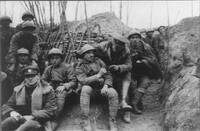
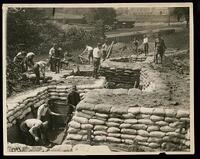
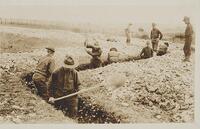
Photograph shows Princeton University students who have enlisted in military service are learning the art of trench construction through physical labor in France.
Training for modern warfare consists mostly in digging one trench after another, and our boys, realizing the importance of this training, go at it with a will.
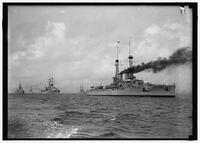
Dreadnought USS Wyoming leading what is likely Battleship Division Nine on its way to England, where the ship ships became part of the British Grand Fleet during World War I.
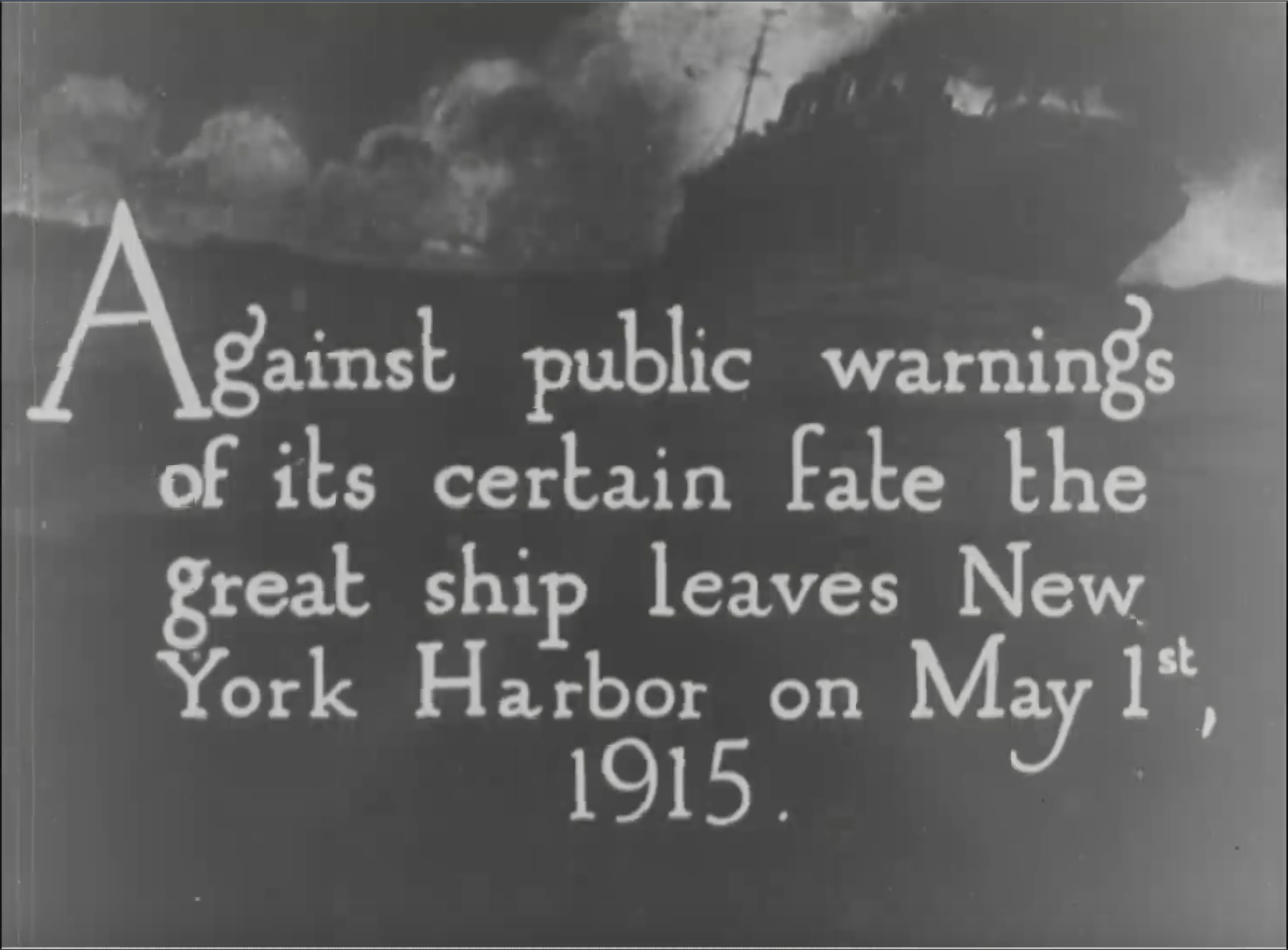
Silent film reel showing the Lusitania leaving New York and its wreckage on the Irish coast. It also shows trench warfare on Germany's two fronts. Reel 7 of 7
CW: Blackface (1:39-1:47). Scenes showing huge crowds in various locations waving flags and banners, carrying symbols of victory. Kaiser’s coffin, effigy on stretcher laid out as for burial. Streetcars and automobile traffic move with difficulty - outdoor service - white clad nuns. View of city skyline and mooring lines of ship. railroad cars with returning soldiers - crowds gathered to greet them - greetings.