Bird family papers, 1821-1947 (majority within 1879-1941)
Item set
Items
-
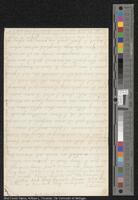 Frances Rowe's letter to George N. Bird, 1882 February 12 This handwritten illustration, created by Frances Rowe on February 12, 1882, features two distinctive symbols labeled "Minnie's Mark" and "Addie's Mark." Minnie's mark depicts a man's profile, while Addie's mark resembles the alchemical symbol for distilled vinegar: an X with four dots between its arms. The drawings appear on the fourth page of a letter Frances, also known as "Frankie," wrote to George Niles Bird from Binghamton, New York. The illustrations demonstrate how personal symbols and playful drawings could become part of handwritten correspondence. Although the identities of Minnie and Addie and the specific meanings of their marks remain uncertain, the drawings suggest a shared familiarity with these individuals. As part of the Dearly Yours exhibition, this item highlights the informal and creative dimensions of personal letters, illustrating how visual symbols could communicate identity, familiarity, and social connections beyond written words.
-
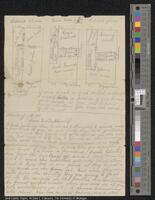 Hope Rowe's letter to Frankie Rowe, 1883 May 15 This architectural illustration, created by Hope Rowe on May 15, 1883, depicts the floor plans of the second, third, and fourth floors of her house. The drawings appear on page 9 of a letter Hope wrote to Frankie Rowe from Brooklyn, New York. The floor plans visually represent the home's interior layout, helping the recipient better understand its arrangement. By including floor plans in her letter, Hope shared details of her domestic surroundings with Frankie, offering a visual connection to a place the recipient might not have seen. As part of the Dearly Yours exhibition, this item demonstrates how illustrations in personal correspondence could communicate everyday experiences and help maintain family connections across geographical distances. The drawings also provide insight into nineteenth-century domestic spaces and the role of handwritten letters in sharing details of home and family life.
-
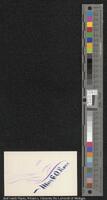 Frances Rowe's calling card for George N. Bird, 1879 June 26 This decorative illustration, created by Frances Rowe on June 26, 1879, features a large bird and curved lines embellishing a calling card bearing the name "Miss F. O. Rowe." The illustration appears on the fifth page of a letter Frances, also identified as "Frank," wrote to George Niles Bird from Smithfield, Pennsylvania. The decorated calling card illustrates how visual elements could personalize correspondence and reflect individual identity. Although the specific meaning of the bird and decorative lines remains unknown, their inclusion adds an artistic dimension to Frances's letter. As part of the Dearly Yours exhibition, this item highlights the role of decorative imagery and personal expression in nineteenth-century correspondence, demonstrating how handwritten letters could combine words, illustrations, and meaningful objects to maintain connections between individuals.
-
 Frances Rowe's letter to George N. Bird, 1879 April 19 (page 2/?)
-
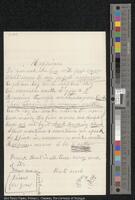 George N. Bird's letter to Frances Rowe, [18]82 January 8 This handwritten illustration, created by George Niles Bird on January 8, 1882, features the affectionate phrase "Kisses for you" enclosed within a quadrilateral at the end of a poem titled "Happiness." The inscription appears on the eighth page of a letter George wrote to Frances Rowe, addressed as "Frank," from Smithfield, Pennsylvania. The combination of poetry and handwritten affection shows how romantic sentiments could be communicated through both literary and visual forms. By ending his poem with the words "Kisses for you," George added a personal and intimate message to his correspondence with Frances. As part of the Dearly Yours exhibition, this item highlights how poetry, affectionate language, and decorative inscriptions express love and maintain emotional connections through handwritten letters.