Introduction to Great Lakes Shipping
The Great Lakes have long served as an important transportation network, connecting communities, industries, and ports throughout the region. Commercial freighters transport a variety of raw materials and manufactured goods across the lakes, including iron ore, coal, grain, salt, and steel. Lake Superior plays a particularly significant role in this shipping network, serving as a major route for transporting iron ore from Minnesota’s Iron Range to industrial centers throughout the Great Lakes region. Approximately 80% of the iron used in the United States comes from Minnesota’s Mesabi Iron Range, making the region an important contributor to the nation’s steel industry.
The Minnesota Iron Range became closely connected to Great Lakes shipping through railroad networks that transported mined ore to Lake Superior ports, including Duluth, Two Harbors, and Silver Bay. From there, lake freighters carried iron ore to steel mills and industrial centers throughout the Great Lakes. This transportation network helped establish Minnesota as a major iron-producing region and continues to connect the area's mining history with the broader history of Great Lakes commerce.
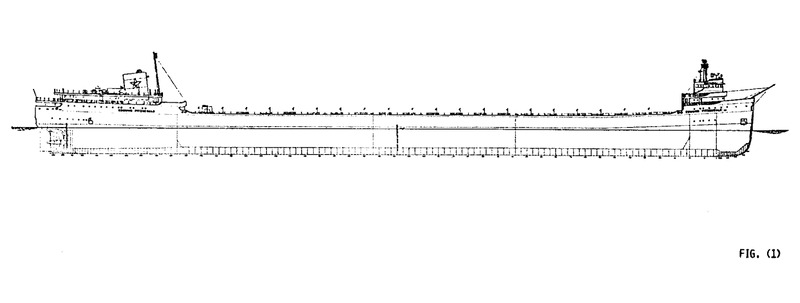
Understanding the Edmund Fitzgerald’s story begins with understanding the vessel itself and the terminology used in the maritime industry. Ships are made up of many interconnected sections, each serving an important purpose in navigation, structure, and daily operations. The diagram below identifies key parts of the Edmund Fitzgerald, providing a visual reference for exploring its construction, final voyage, and sinking. Use the glossary to become familiar with these terms as you navigate the archive and learn more about Great Lakes shipping.
Glossary of Maritime Terminology
- Bilge: The lowest interior compartment of a ship.
- Bow: The front end of a ship.
- Bridge: Also called the wheelhouse or pilothouse, a raised room above the main deck used to steer and navigate the ship.
- Hull: The body of the ship, which creates buoyancy and protects it from flooding or sinking.
- Bulkhead: A wall or structure that separates parts of a room or tanks within a ship’s hull.
- Port: The left side of the ship when facing toward the front.
- Starboard: The right side of the ship when facing toward the front.
- Stern: The back end of a ship.
View the image annotations below to see what this looks like on the Edmund Fitzgerald.