Before the Wreck
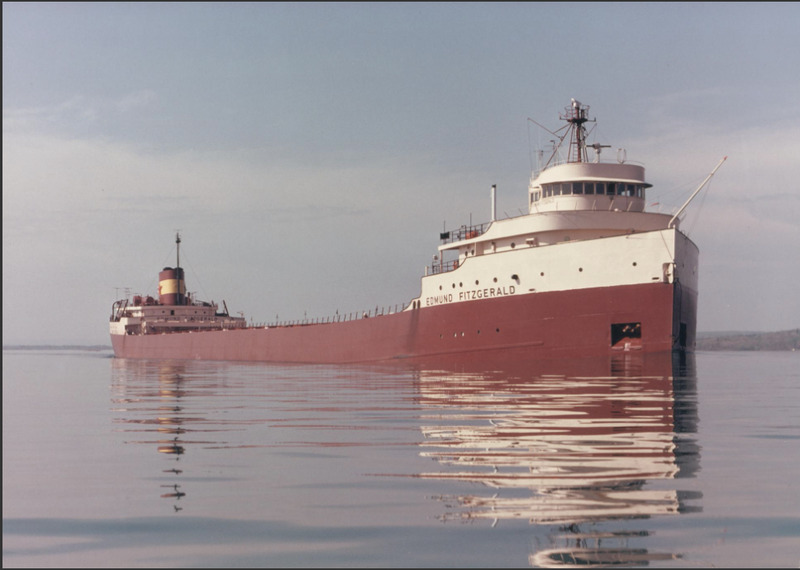
When the SS Edmund Fitzgerald was launched from the Detroit River at River Rouge, Michigan, on June 7, 1958, newspapers treated her as an engineering Triumph. At 729 feet long and 75 feet wide, she was the longest ship ever built for the Great Lakes, and she cost about $8 million to construct (approx. $95 million in 2026). Northwestern Mutual Life Insurance Company of Milwaukee owned the ship and was named for the newly elected board chairman. Columbia Transportation, a division of Oglebay Norton Company of Cleveland, operated her under a long-term lease.
Local papers followed her progress from the launch to her first cargo shipment that September. She was built to haul taconite pellets from Minnesota’s mines to steel mills on the lower lakes, and a 1959 Grand Rapids Press article wondered whether she was the “Last Word in Lakers?” believing she would hold the title for years to come as the largest and most advanced freighter. Two years later, the 730-foot Edward L. Ryerson and Arthur B. Homer soon surpassed her by a foot, becoming the longest ship allowed to enter the Soo Locks. Even so, the Fitzgerald became one of the best-known ships on the lakes. In August 1960, the Detroit News reported that she had delivered “the largest cargo of ore ever carried on the Lakes,” and by the mid-1960s she was regularly moving more than a million tons in a single season.
Edit in:
- First cargo: Silver Bay, Minnesota, September 1958, under Capt. Bert Lambert. This ties your page back to your introduction.
- Economic context: She entered service during a slump. The January 1959 Detroit News piece reports lake iron ore traffic falling sharply in 1958, so she arrived in a rough year for the industry.
Filler Text to Add More
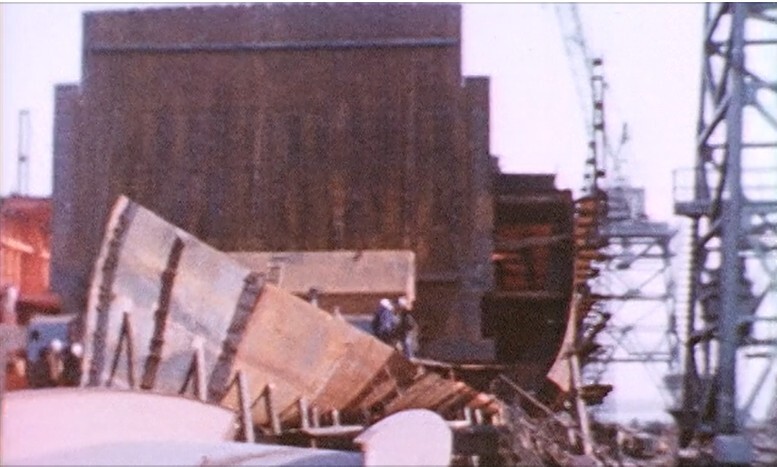
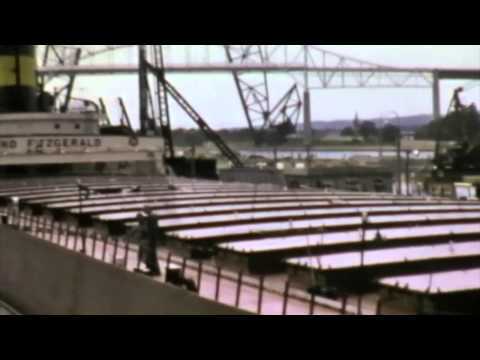
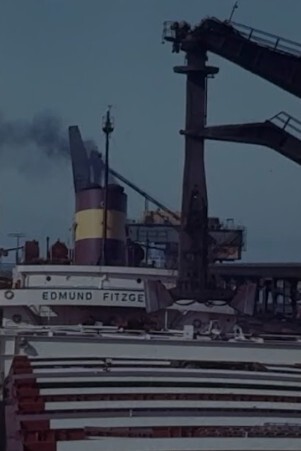
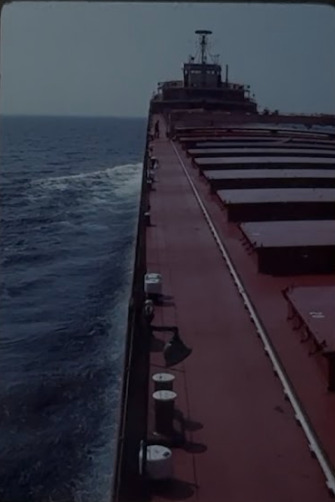
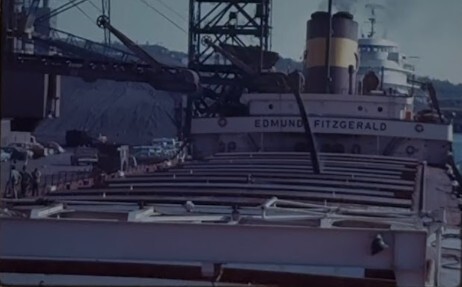
The Edmund Fitzgerald regularly carried taconite pellets across the Great Lakes. Taconite is a low-grade iron ore that is crushed, concentrated, rolled into marble-sized pellets, and baked, which makes it easy to ship and process in blast furnaces. Because the Fitzgerald was not a self-unloading vessel, its cargo was removed at port by shore-side equipment such as hulett unloaders. Beginning in the 1980s, self-unloading vessels increasingly replaced the need for huletts. The last huletts in regular use ceased operations in the early 1990s.
*Concluding Sentence/Transition to next page* For 17 years...the next page focuses on her final voyage