Anti-War and Anti-Authoritarian Student Action
In the 1980s, there was an increase in awareness of the United States’ role in wars and violence around the world. Students were leading protests and action against US participation and funding of wars and human rights violations.


One of the war related protests students were leading was against poverty recruitment. Since the ending of the draft in 1973, low income high school students were targeted by the US military. The military was often pushed to these students as a chance to escape poverty and offered them a chance at higher education that they would not be able to afford otherwise.
Not only did this affect the choices of high school students, this also affected many other young people from disadvantaged backgrounds, who chose to go into the military because they were not able to find other opportunities to support themselves or their families.
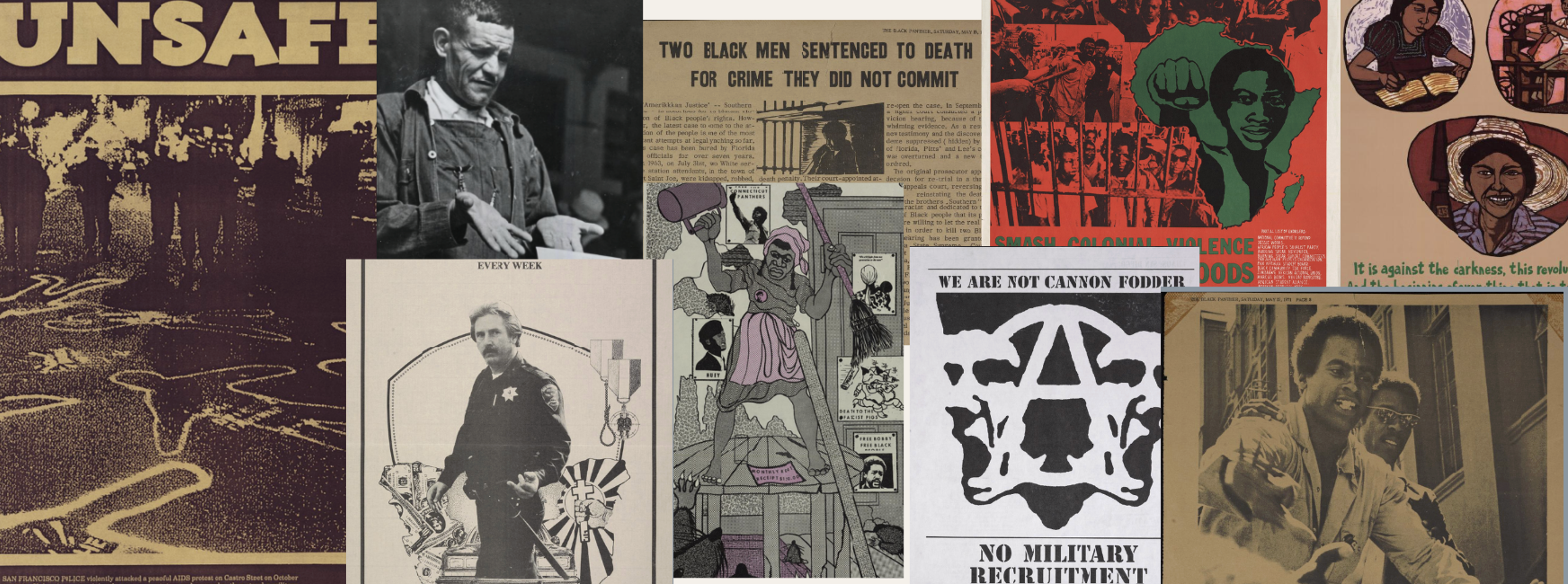
The top poster is protesting against military recruitment on campus and acknowleding that recruitment on campus would like target those who are from low income backgrounds and students of color, who were disproportionately affected by this. The posters here both address this, referring to this as the “poverty draft”.
The text at the top left of the second poster is a political critique of San Diego’s “military-industrial complex,” arguing that the city’s economy is deeply dependent on military spending, defense contractors, and research partnerships with local universities. It claims this dependency limits workers’ choices, strengthens militarization, and makes economic alternatives difficult. The document also discusses how radical labor organizing within military-related industries could challenge these structures, though union activity is restricted. It warns that reform is insufficient because capitalism is inherently tied to war, and it encourages anti-militarist, anti-draft, and peace-oriented organizing through community groups working on nonviolence, environmental issues, and resisting military dominance in the region.
The bottom right section of the second poster here is an action calendar listing upcoming political and community events organized by the B.A.A.C. in San Diego in 1989. It includes a general meeting at the public library, a benefit event for Fran Tutt featuring music and poetry, and a downtown demonstration to protest the production of ozone-destroying chemicals. It also provides contact numbers for more information and advertises San Diego’s Daily Impulse/Point-Blank publication.
Both are examples of anti-war and anti-authoritarian thoughts, works, and events that students were engaging with in California during this time.

Years Prior to the action against "poverty recruitment", students had been organizing against the Vietnam War.
UC Berkeley was leading in political action after the Free Speech Movement in 1964. The Vietnam Commencement Speech was a part of this context (FSM Archives, 1999).
Approximately 6000 students and faculty members held an alternative event that specifically protested U.S involvement in Vietnam. This was a direct challenge to the Reagan administration and the university administration, who opposed such demonstrations.
One of the things the people at the event were doing was the circulation and signing of pledges refusing to participate in the war. This was a community led act of civil disobedience, intended to offer mutual support to those facing the draft.
The protest took place in 1968, a year that can be traced to a shift in opinion about the was for many Americans. Events like the Vietnam Commencement helped future protests on campus, including other anti-war efforts and strikes.