Police Violence
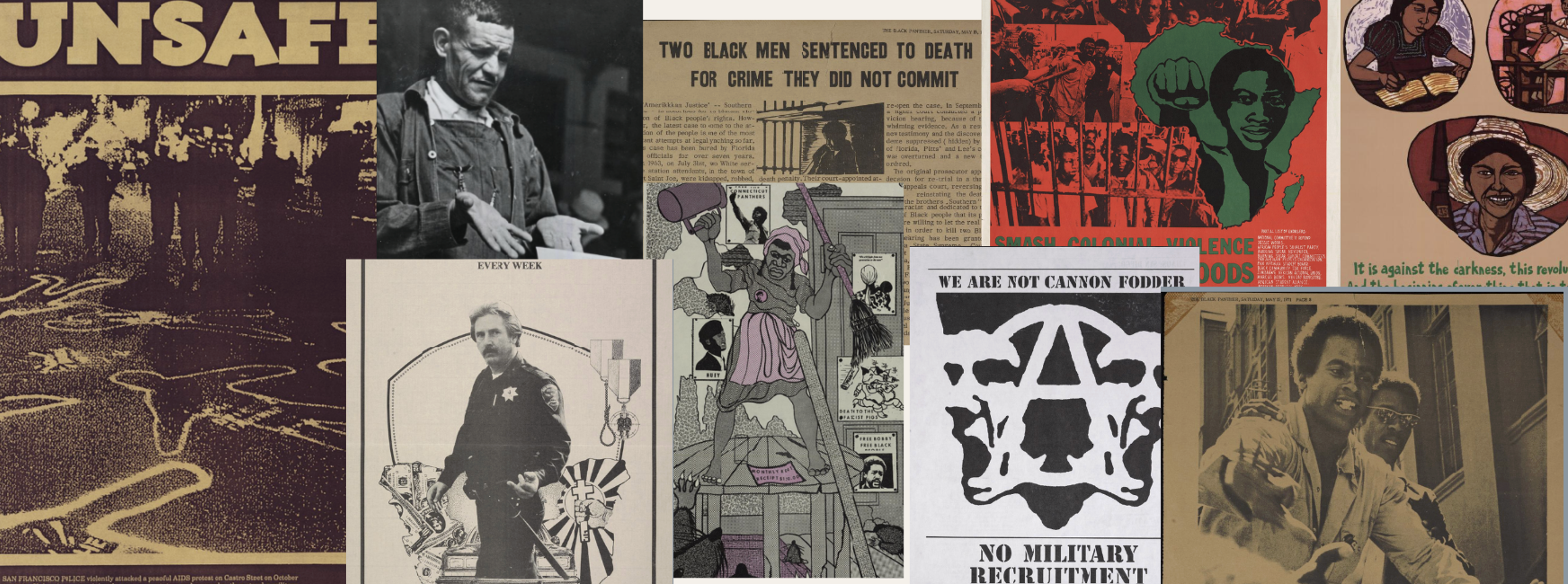
Here are a series of posters from the 1980s highlighting police violence.
Although some people don’t think of California as a center of police violence, organizers and residents knew otherwise. From Los Angeles to Oakland to the Central Valley, Black, Chicano, Asian American, and Indigenous communities were dealing with disproportionate policing, excessive force, and deaths at the hands of officers. Posters like this represent the growing grassroots resistance of the 1960s–1980s, when community groups used art, public demonstrations, and political education to expose what was happening and push back against police power.
The International Police Victims Week, every week, help the police, beat yourself up! poster uses satire and dark humor to call out the reality of police violence, flipping the narrative by telling people to “help police” by essentially assaulting themselves, a direct critique of how officers routinely justified brutality by claiming the victim “resisted.” The message exposes how normalized state violence had become, especially in communities of color, and how policing relied on narratives that blamed the harmed person rather than the institution harming them.
The International Police Victims Week Power Failure poster pulls together dozens of real newspaper headlines to make one point clear, police violence and state repression are not isolated incidents, they happen “every week.” By stacking headlines about wrongful arrests, raids on immigrant workers, police shootings, FBI repression, and surveillance, the poster exposes a pattern of violence that crosses city, state, and even national borders.
The Unsafe poster presented the scene when SAN FRANCISCO POLICE violently attacked a peaceful AIDS protest on Castro Street on October 6, 1989. Protestors and the press have dubbed October 6, 1989, the "Night of Resistance" to honor the demonstrators and Castro residents who non-violently resisted the police invasion