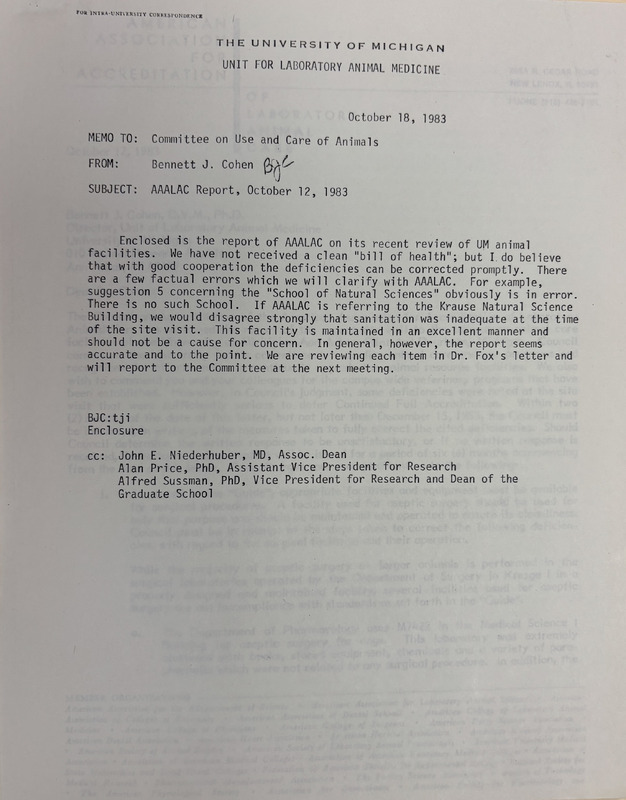
A 1983 memo from Bennett J. Cohen of the University of Michigan’s Unit for Laboratory Animal Medicine to the Committee on Use and Care of Animals summarizing the newly received AAALAC site-visit report. Cohen notes deficiencies the report found and disputes some of its claims.
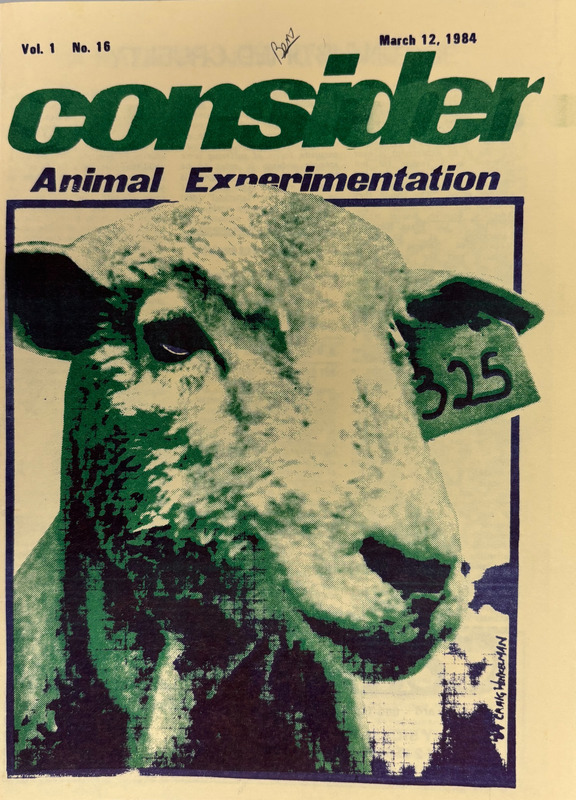
A short student-made zine printed on newsprint with monochrome photographs, advertisements, and opinion articles. Bennett J. Cohen, director of ULAM at U-M wrote an article in it titled “A Path to New Knowledge,” which argues that animal experimentation is essential to scientific and medical advancement. He emphasized existing regulatory standards that he claimed ensured humane conduct. The publication gives contrasting viewpoints on animal testing research, both for and against.
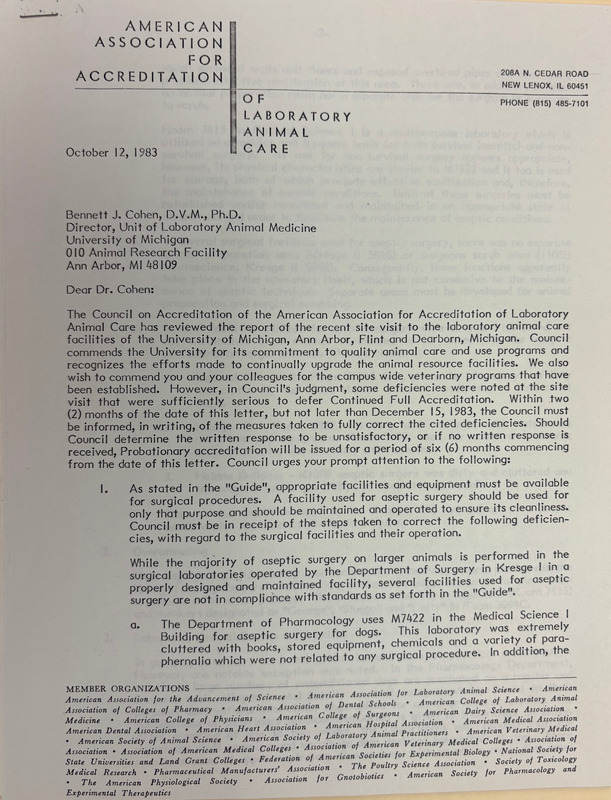
A 1983 site-visit evaluation report from the American Association for Accreditation of Laboratory Animal Care that reviews the state of animal research facilities at the University of Michigan. It summarizes widespread deficiencies in surgical spaces, sanitation practices, housing conditions, ventilation, lighting, and animal health oversight, along with required corrective actions. Notable findings include dirty and blood-stained surgical areas, overcrowded or improperly sized cages, rusted or urine-encrusted cages and equipment, and a morgue freezer overfull of dead animals amid blood and other debris.
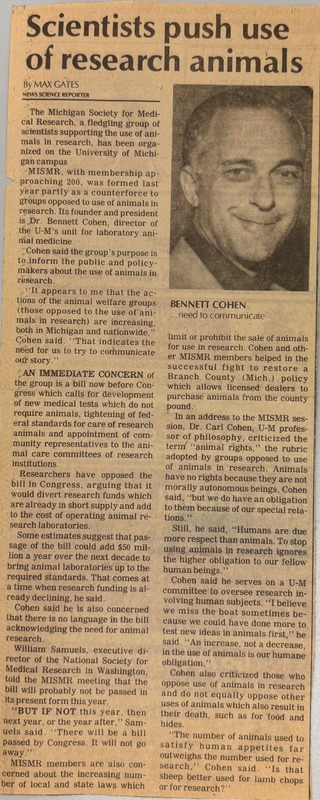
The article reports on the formation of the Michigan Society for Medical Research at the University of Michigan, a group advocating for the continued use of animals in scientific research amid growing opposition from animal-welfare organizations and pending federal legislation. It highlights statements from Dr. Bennett Cohen and others arguing that animal research is essential, warning that proposed regulations would increase costs and hinder scientific progress.
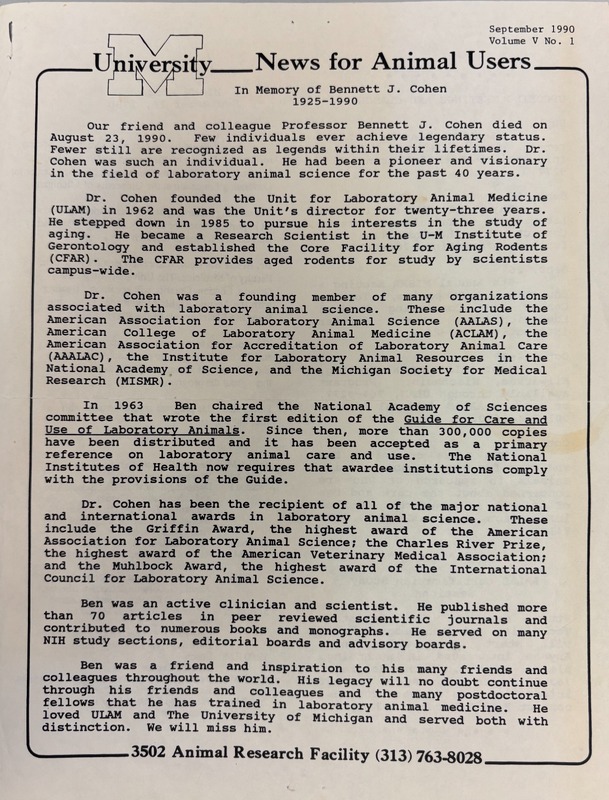
Newsletter from the University of Michigan’s News for Animal Users (Dated September 1990) memorializing Professor Bennett J. Cohen (1925–1990). The text highlights Cohen’s pioneering role in laboratory animal science, his founding and 23-year leadership of the Unit for Laboratory Animal Medicine (ULAM), and his establishment of the Core Facility for Aging Rodents (CFAR). The piece also describes his major contributions to national standards, including chairing the committee that produced the first Guide for the Care and Use of Laboratory Animals, and further notes his many awards, publications, and service on boards. It concludes with reflections on his mentorship, global influence, and lasting impact on the University of Michigan’s research community.